
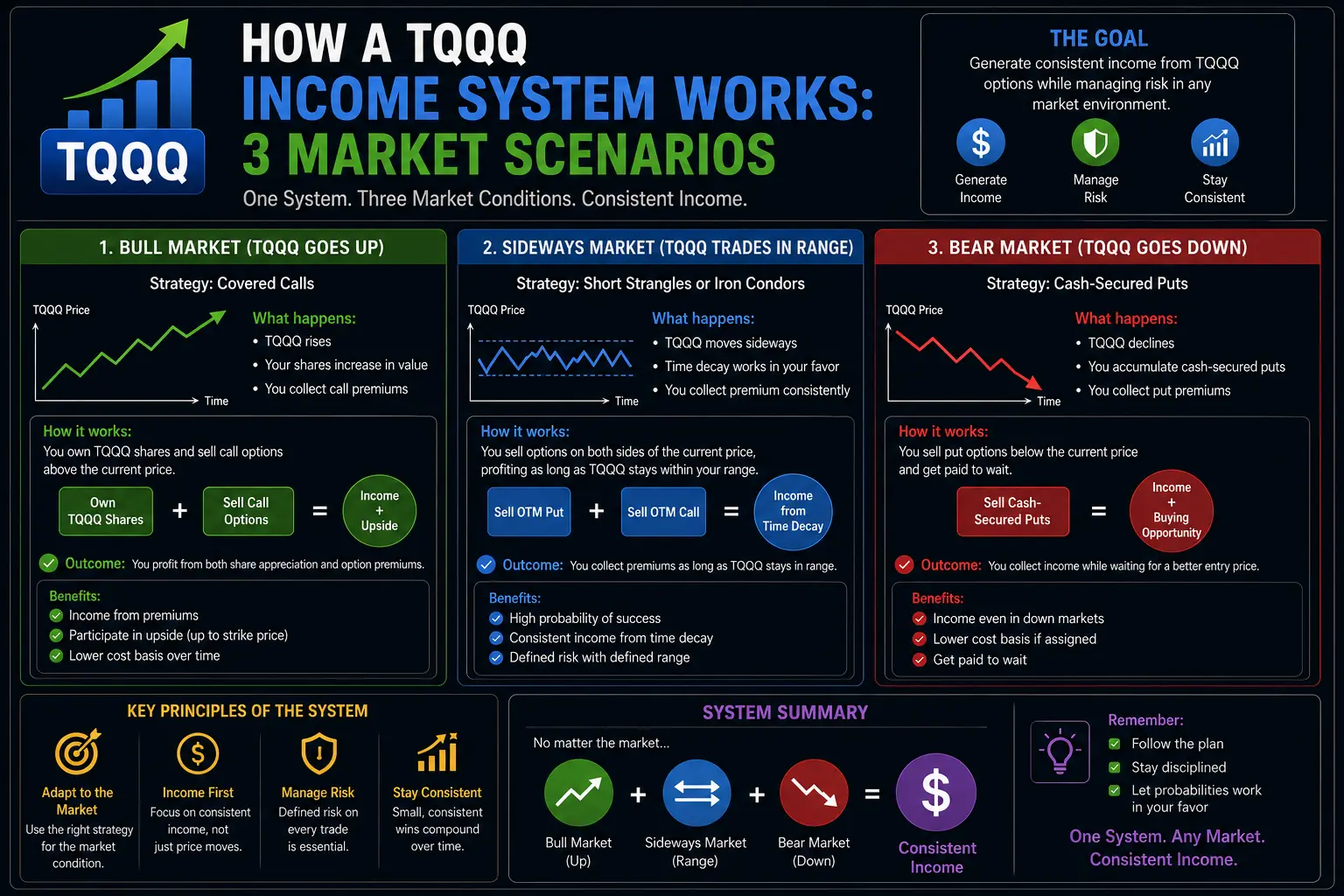
System Overview
Long TQQQ position + options income overlay = diversified return streams
Instead of betting everything on price appreciation, the system generates:
- Capital gains from TQQQ ownership
- Premium income from covered calls
- Put premium from cash reserves
[IMAGE_1: System architecture diagram]
Scenario 1: Rising Market
TQQQ climbs steadily. Tech is winning. Rates are accommodating.
What happens:
- Your TQQQ shares appreciate (+5% to +15% per year)
- Covered calls get called away at their strike price
- You sell new calls at higher strikes, collect more premium
- Cash-secured puts remain “safe” — no assignment pressure
Example outcomes:
- TQQQ gains: +$2,000
- Call premiums collected: +$600
- Put premiums collected: +$300
- Total return: $2,900
The beauty: You participated in the upside and collected income. You didn’t give up the move.
Scenario 2: Sideways Market
TQQQ bounces between $38-$42. Tech is conflicted. No directional clarity.
What happens:
- Your TQQQ shares stay flat (no gain/loss)
- Calls collected multiple times (same strike range, new months)
- Puts collected every month (no assignment if you set strikes correctly)
- Time decay works for you, not against you
Example outcomes:
- TQQQ gains: $0
- Call premiums collected: +$800
- Put premiums collected: +$400
- Total return: $1,200
No price movement, but 12%+ annualized income on capital deployed. This is where options income systems shine.
Scenario 3: Falling Market
Tech breaks down. TQQQ falls 20-30% over several months.
What happens:
- Your TQQQ position depreciates (-$1,500)
- Calls expire worthless (no assignment, you keep 100% of premium)
- Cash-secured puts get assigned (you buy TQQQ at your put strike, cheaper than current price)
- You reinvest put premiums into new put positions
Example outcomes:
- TQQQ position loss: -$1,500
- Call premiums (expired): +$600
- Put premiums (collected before assignment): +$400
- New shares purchased at discount: Positioned for recovery
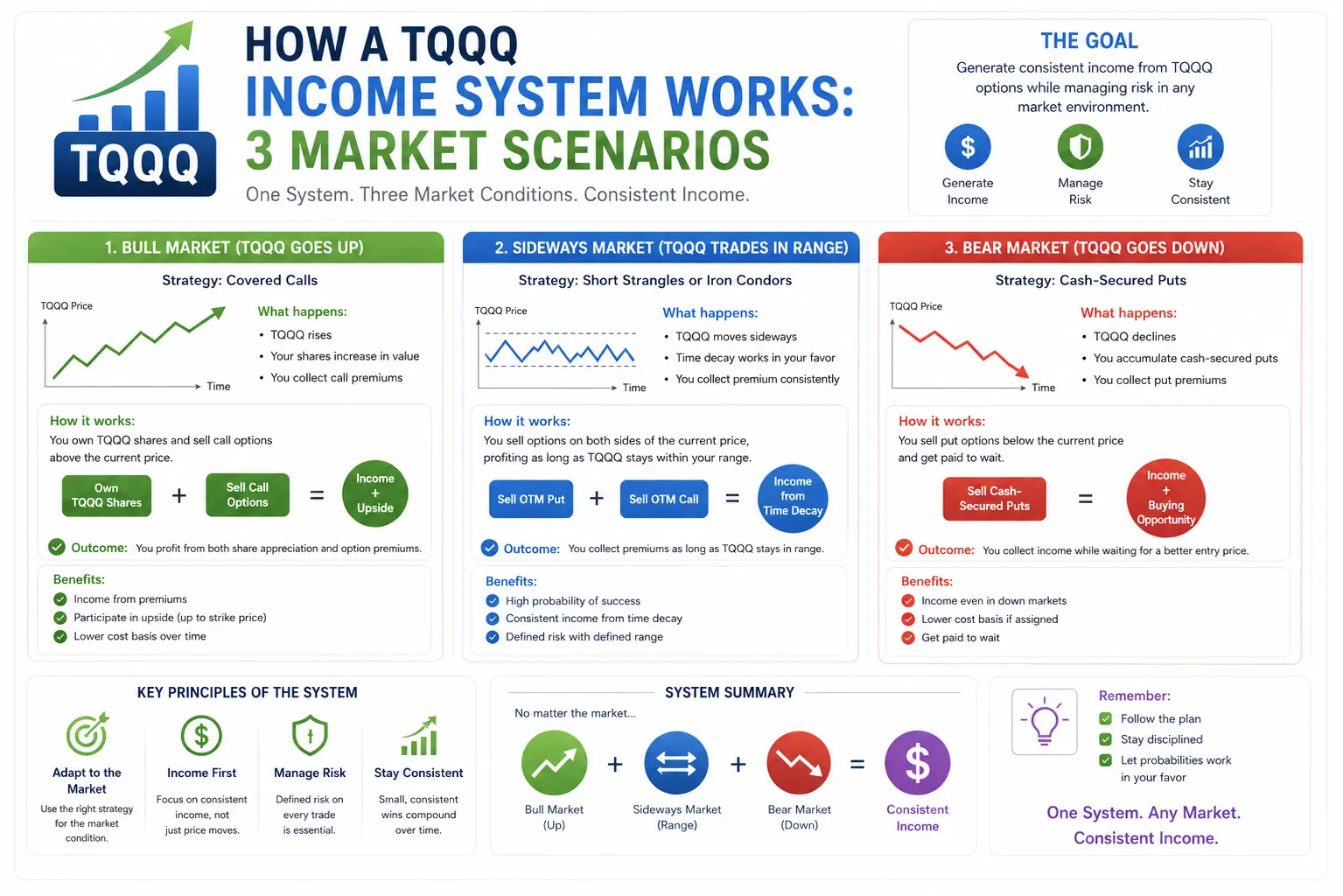
The system transitions to accumulation mode. You’re buying the dip with put assignments, harvesting premium, and preparing for the inevitable recovery.
[IMAGE_2: Market cycle diagram]
Core Risk: It’s About Time, Not Volatility
Most traders think options income strategies fail because of “volatility risk.” Wrong.
The real risk is time horizon risk — if you need your money in 6 months and the market is down 30%, you’re locked into losses.
But if your time horizon is 3+ years, even a bear market becomes an accumulation opportunity. You buy cheaper shares through put assignments while collecting premium.
Core Principle: Structure, Not Prediction
The genius of this system: it doesn’t require you to be right about the market direction.
- Bull market? Upside is captured.
- Bear market? Accumulation happens at discounts.
- Sideways? Time decay is harvested.
Risk is managed through position sizing, strike selection, and cash buffers — not through guessing what the Fed will do next.
Internal Link Suggestions
- TQQQ Covered Calls and Cash-Secured Puts Strategy Explained
- Best Broker for International Investors Using Leveraged ETFs